Brand Strategy vs Content Marketing: Why Content Can't Fix a Weak Brand
Brand strategy defines what an organisation stands for, who it is for, what makes it different and how those beliefs guide decisions and behaviour. Content marketing distributes and expresses that meaning. When businesses produce content before establishing a clear brand, they can generate more posts, clicks and impressions without building stronger recognition, trust or differentiation. Content can amplify a brand. It cannot replace one.
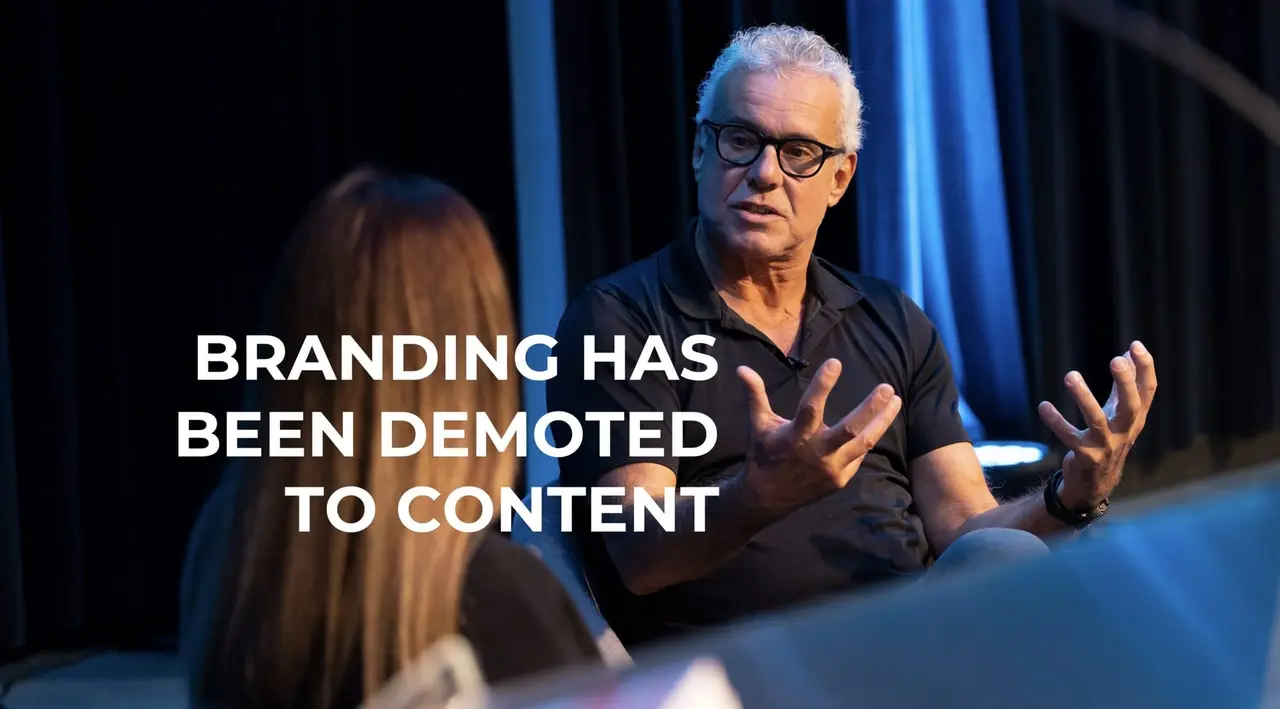
Branding has been demoted to content.
Somewhere along the way, we got the order completely arse-about.
The brand used to lead.
Now it feeds the content machine.
Monday needs a LinkedIn post.
Tuesday needs a Reel.
Wednesday needs an email.
Thursday needs thought leadership.
Friday needs something “fun”.
Quick.
We need content.
About what?
Who cares.
The calendar has a hole in it.
Fill it.
The tail is leading the dog.

The tail’s leading the dog.
Brand strategy and content marketing are not the same thing.
Content asks:
What are we going to say today?
Brand strategy asks:
Who the fuck are we?
Very different question.
A proper brand gives an organisation an answer to things like:
What do we stand for?
What difference are we here to make?
Who are we for?
What do we believe?
What will we never compromise?
How should we behave?
What should people consistently experience from us?
What decisions fit us, and which don’t?
Only then does content become interesting.
Because now there is actually something to express.
More content is not more brand.
That’s the trap.
More posts.
More videos.
More campaigns.
More impressions.
More clicks.
More optimisation.
More dashboards showing increasingly impressive numbers about the amount of stuff we’re doing.
Output everywhere.
Meaning nowhere.
You can become extremely efficient at communicating absolutely nothing.
And now AI has made the production of average content almost infinitely easier.
Great.
Just what the world was waiting for.
More average content.
The scarce asset is no longer the ability to produce.
It’s having something distinctive enough to be worth producing.

Marketing is optimising the wrong end of the problem.
CTR.
CPC.
CPA.
Reach.
Engagement.
Conversions.
Nothing wrong with any of them.
Measure away.
But optimisation assumes there’s something worth optimising.
If your positioning is weak, optimisation spreads weak positioning more efficiently.
If your message sounds like everybody else’s, distribution helps more people discover that you sound like everybody else.
If the organisation doesn’t know what it stands for, another 30-day content calendar will not discover it for you.
You cannot optimise your way out of a weak brand.
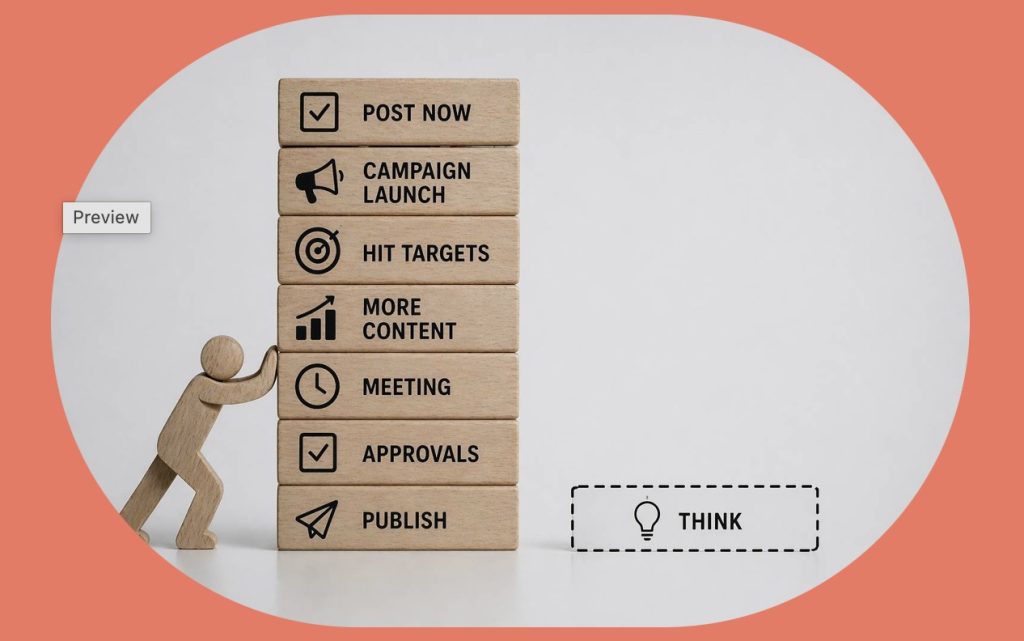
Speed is killing thinking.
Everything is urgent.
We need the campaign.
We need the post.
We need the launch.
We need an answer before the meeting ends.
Brand thinking doesn’t work particularly well like that.
You need to investigate.
Challenge assumptions.
Talk to people.
Find uncomfortable truths.
Work out what matters and what doesn’t.
Decide.
Then express it.
That’s why my own BIP Model runs in this order:
Discovery → Strategy → Identity → Launch.
Not:
Launch → Launch → Launch → Fuck, what do we stand for again?
The model starts by finding out who the person or organisation actually is, turns that into strategy, gives that strategy an identity, and only then takes it into the world.
There’s a reason for the order.
Content is incredibly valuable.
I’m not anti-content.
Quite the opposite.
Good content is one of the most powerful ways a brand can travel.
It teaches.
Challenges.
Creates recognition.
Builds authority.
Gives people language.
Starts conversations.
Gets shared.
Gets found.
Gets remembered.
But content is the carrier.
The brand is what it’s carrying.
That’s the distinction we’ve forgotten.
Here’s the BIG problemo.
Teams are now optimising posts instead of shaping perception.
Chasing engagement instead of meaning.
Feeding platforms instead of building brands.
And because everybody is busy, it feels productive.
Until one day you have 2,000 pieces of content and nobody can clearly explain what the organisation stands for.
That’s not a content problem.
That’s a brand problem.
Your brand hasn’t disappeared because it failed.
It’s disappeared because you buried it under activity.
If your brand only exists as content, you don’t have a brand.
You have output.