How to Measure Employee Performance: Why Impact Matters More Than Attendance
Employee performance should be measured by the value a person creates, not simply by attendance, activity or hours worked. Availability matters, particularly in roles where presence is essential, but high-value performance is ultimately about outcomes: better decisions, stronger results, higher standards and the effect someone has on the people around them. Latrell Mitchell gives us a fascinating $1.1 million example.
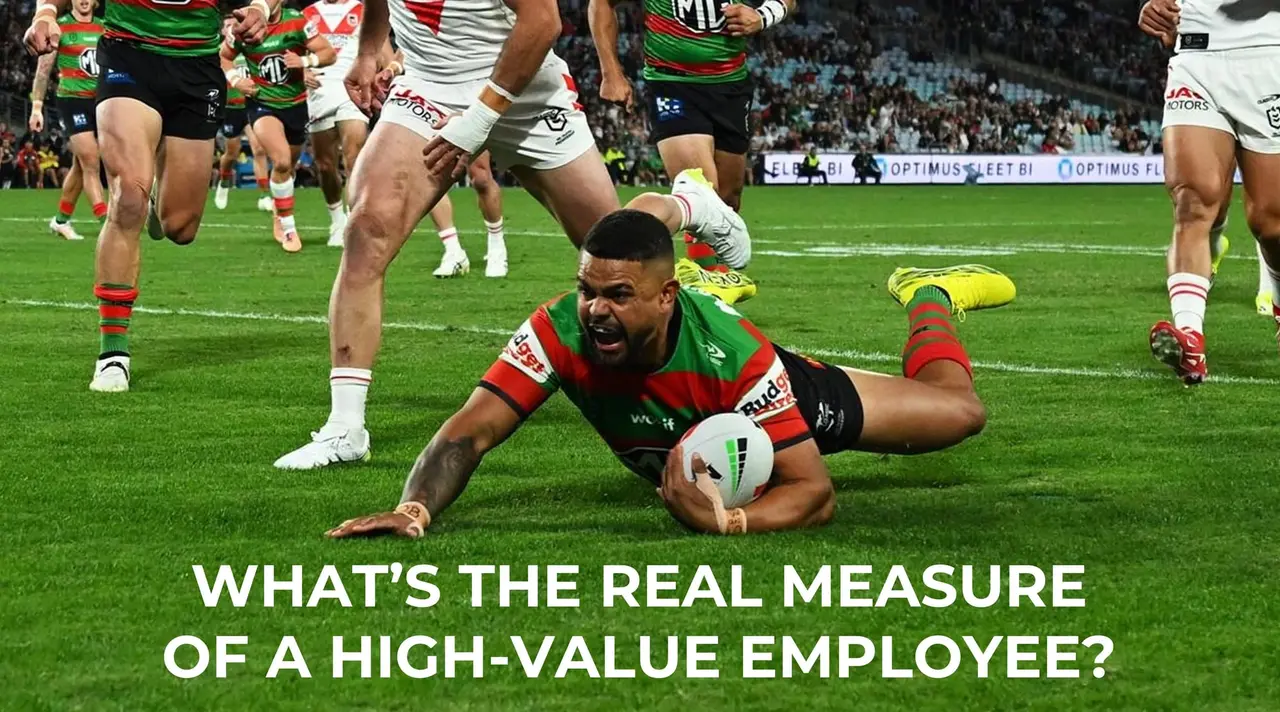
What’s the real measure of a high-value employee?
Let me introduce you to the $1.1 million employee.
Latrell Mitchell.
One of the most naturally gifted rugby league players in Australia. South Sydney reportedly pay him around $1.1 million a year.
And he doesn’t turn up for work very often.
In 2026, Latrell has played nine NRL games. He has also scored 11 tries and made 10 line breaks in those nine appearances. That’s a ridiculous amount of attacking impact for someone who has spent considerably more time off the field than Souths would like.

Which creates a very interesting business question.
Are you paying people to turn up? Or are you paying them to make a difference?
Let’s look at the numbers.
In Latrell’s nine games for Souths this season, by my own count of the results:
5 wins. 4 losses. 56% win rate.
Without him:
7 wins. 5 losses. 58% win rate.
So if you looked only at 2026, you could make a perfectly reasonable argument that South Sydney don’t need him.
Except short-term numbers don’t always tell you the whole story.
Take the longer view.
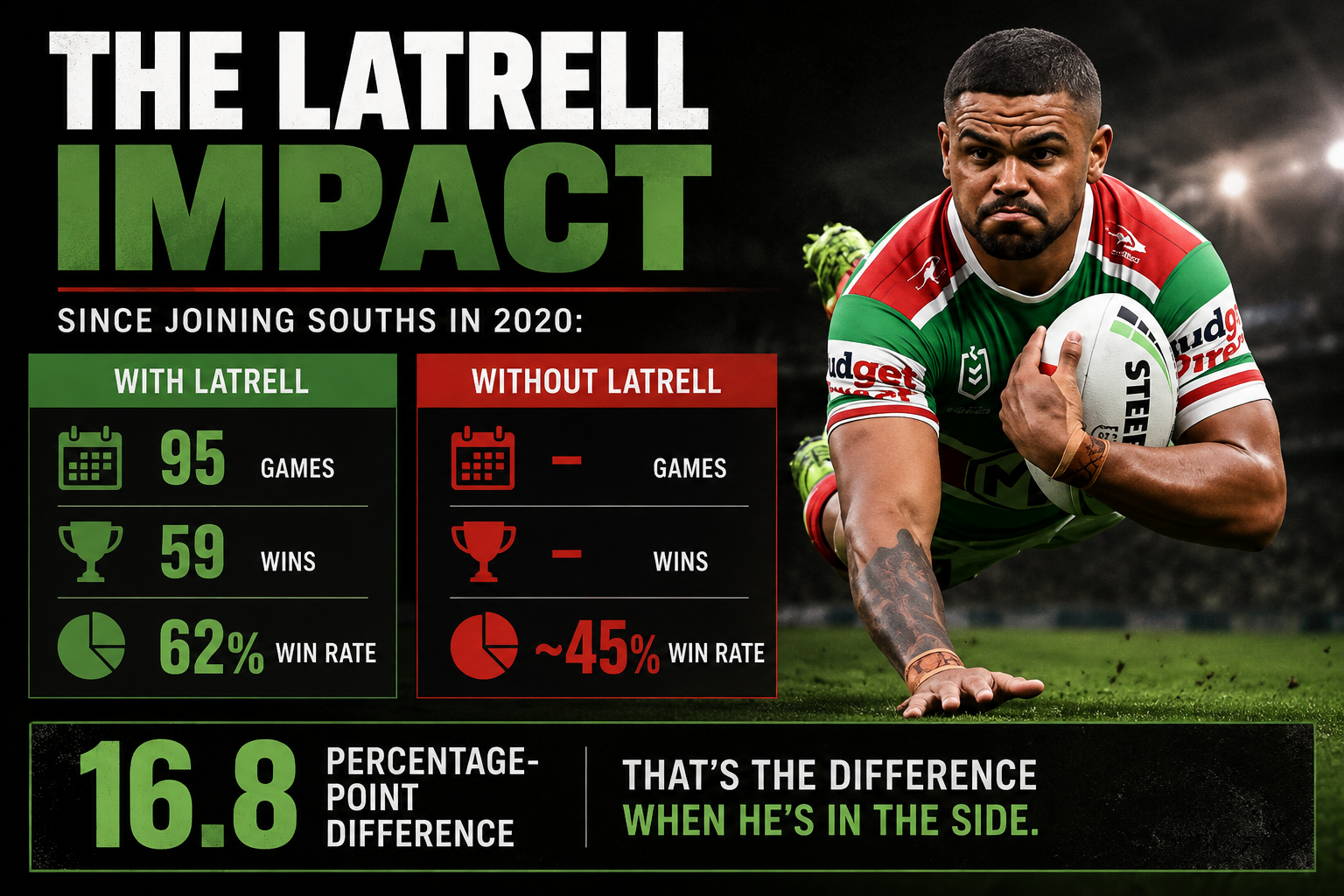
Since Latrell joined South Sydney in 2020, the numbers in my analysis put Souths at roughly a 62% winning rate when he plays, versus approximately 45% when he doesn’t.
Now we’re talking.
That’s the difference between asking, “How often does this bloke turn up?” and asking:
“What happens when he does?”
Businesses measure a lot of the wrong stuff.
Hours worked.
Days in the office.
Calls made.
Emails sent.
Meetings attended.
Reports completed.
Tasks ticked off.
All measurable.
And sometimes almost meaningless.
You can be spectacularly busy and create very little value.
You can also have somebody who walks into a meeting, asks one question nobody else has thought to ask, and changes a $5 million decision.
Same eight-hour day?
Not even close to the same value.
That is the problem with confusing activity with impact.
So how should you measure employee performance?
Start with the job the person is actually there to do.
What gets better because this person is here?
Do customers stay longer?
Does the team make better decisions?
Do standards rise?
Do other people perform better around them?
Do problems get solved faster?
Does revenue grow?
Does unnecessary work disappear?
Does this person create something that would be difficult to replace?
Those are much harder questions than, “Were you at your desk at 9.00?”
They’re also much better questions.
Before HR loses its shit…
No, attendance doesn’t suddenly become irrelevant.
If you’re a surgeon, airline pilot, receptionist, teacher or the bloke driving the 7.42 bus, being there matters quite a lot.
And a brilliant person who is permanently unavailable can become an organisational risk, however talented they are.
The point is not that attendance doesn’t matter.
The point is that attendance is an input. Performance is an outcome.
Don’t confuse the two.

Now ask the $1.1 million question.
Imagine one of your highest-paid people was available only 43% of the time.
Would you sack them?
Reduce their salary?
Call them unreliable?
Maybe.
But what if the organisation performed substantially better over the long term whenever they were there?
Now what?
That’s why Latrell Mitchell is interesting.
Not because every employee should be measured like an NRL superstar.
Because he exposes the weakness in the way we sometimes think about human value.
We count what’s easy to count.
And miss what actually matters.
The highest-value people don’t necessarily do the most.
They make the biggest difference.