How Do Limiting Beliefs Hold You Back? The Four-Minute Mile Has an Answer
Limiting beliefs hold us back because what we believe is possible influences what we attempt, how hard we persist and where we set our own limits. Roger Bannister's first sub-four-minute mile became a powerful demonstration of this. Once one runner crossed a barrier that had resisted the world's best athletes for years, others quickly followed. The lesson isn't that physical limits don't exist. It's that sometimes the limit stopping us isn't physical at all. It's the one we've accepted in our own head.

What’s the four-minute mile of your life?
For years, the four-minute mile seemed to sit tantalisingly beyond the limits of human performance. People had got close. Very close.
In 1945, Swedish runner Gunder Hägg ran 4 minutes 1.4 seconds. That world record stood for almost nine years. One point four seconds. That’s all that separated the world’s fastest human beings from breaking four minutes, and nobody could do it.
The four-minute mile developed an almost mythical status. Australian runner John Landy, one of the greatest milers in the world at the time, described the barrier as a kind of psychological wall.
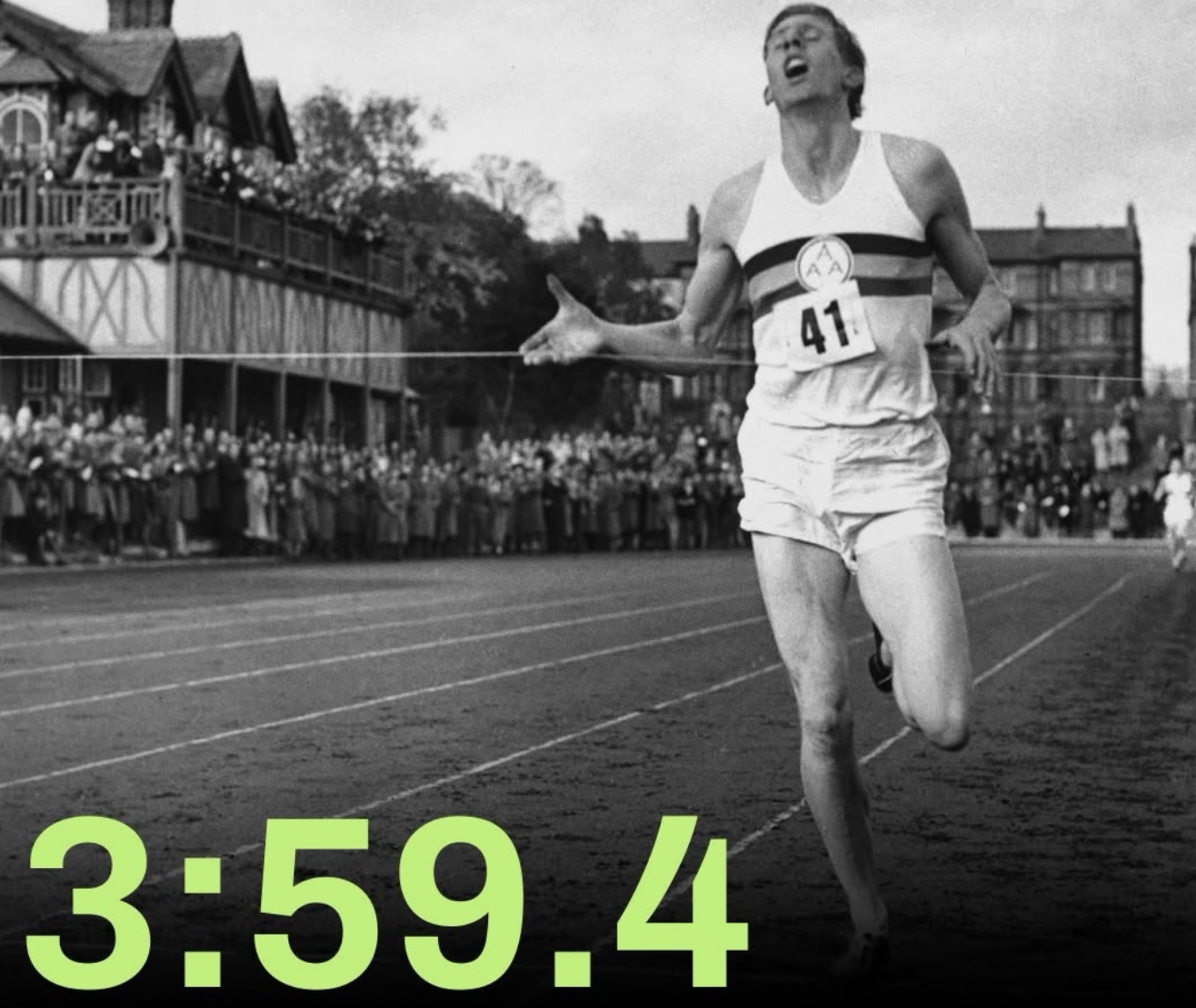
Then, on a windy spring day in Oxford on 6 May 1954, a 25-year-old medical student called Roger Bannister ran the mile in: 3 minutes 59.4 seconds.
Six-tenths of a second. That was all it took to change what was possible. Or perhaps, more accurately, to change what people believed was possible.
Then something very strange happened
Forty-six days later, John Landy did it too. And he didn’t scrape underneath four minutes. He ran 3:57.9, taking another second and a half off Bannister’s record. World Athletics
The man who had repeatedly failed to break four minutes suddenly smashed through it. Then others followed. Today, more than 2,000 men have run a mile in under four minutes. Runner’s World
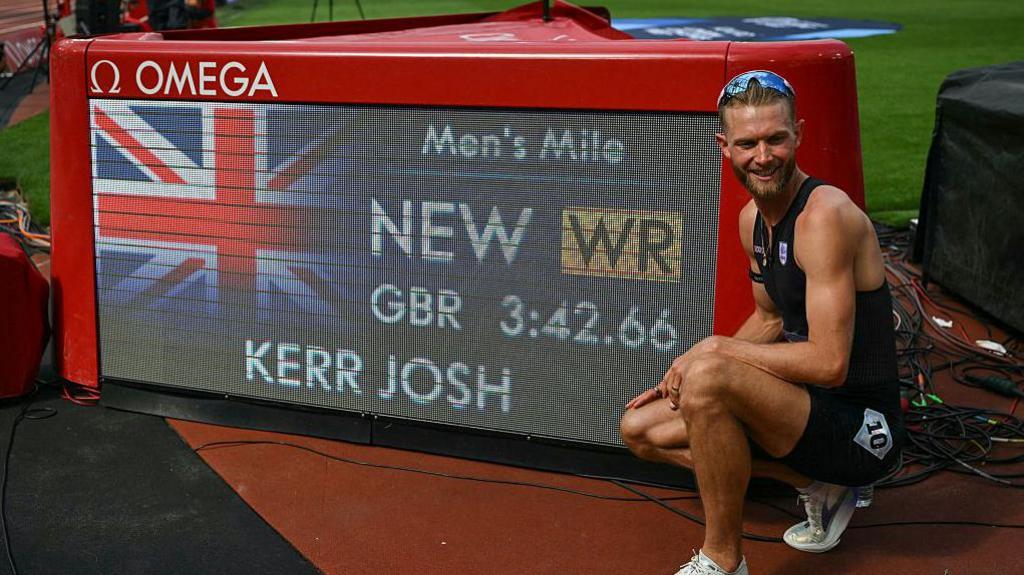
And in July 2026, Scottish runner Josh Kerr did something extraordinary. He ran 3:42.66. A new world record. Kerr took almost half a second off Hicham El Guerrouj’s record, which had stood for 27 years, and became the first human being in history to run a mile in less than three minutes and 43 seconds. World Athletics
Think about that. Bannister’s supposedly magical barrier was 4:00. Kerr has now run the same distance more than 17 seconds faster.
The human species didn’t suddenly evolve in 1954. So what changed?
The four-minute mile wasn’t physically impossible
This is where the story gets more interesting.
Over the years, the Bannister story has been polished into a lovely motivational tale in which doctors, scientists and experts supposedly declared that running a mile in under four minutes was physically impossible. That’s overstating it.
Elite runners knew four minutes was within reach. They were actively chasing it. Bannister himself later pushed back against the idea that informed observers universally considered the feat physiologically impossible. Wikipedia
But there was a barrier. The world’s best runners had been staring at four minutes for years. Nobody had crossed it. And the longer nobody crossed it, the more significant that number became.
Four minutes stopped being a number.
It became a thing. A line. A wall. A definition of what human beings could and couldn’t do.
Until somebody did.

Impossible is nothing
There’s an old Adidas line I’ve always loved: Impossible is nothing.
Not because nothing is impossible. Plenty of things are impossible. Physical limits exist. Biological limits exist. Circumstances exist.
Talent matters. Training matters. Opportunity matters. Genetics matter.
But there’s another kind of limit.
The limit we decide is real before we’ve actually tested it.
Our beliefs have power over us because we behave as though they’re true.
If I believe I’m not creative, I don’t put my ideas forward. If I believe I’m too old to change careers, I don’t investigate another career. If I believe I’m terrible at public speaking, I avoid speaking. If I believe I’ll never build a successful business, I make decisions consistent with somebody who isn’t going to build one. If I believe people like me don’t do things like that, I probably won’t.
The belief starts producing the behaviour. And eventually the behaviour gives me the evidence I need to prove the belief was right all along.

We don’t only discover limits. We create them.
This is what makes limiting beliefs so powerful. They don’t feel like beliefs. They feel like facts.
I’m not that kind of person.
I’m too old.
I’m too young.
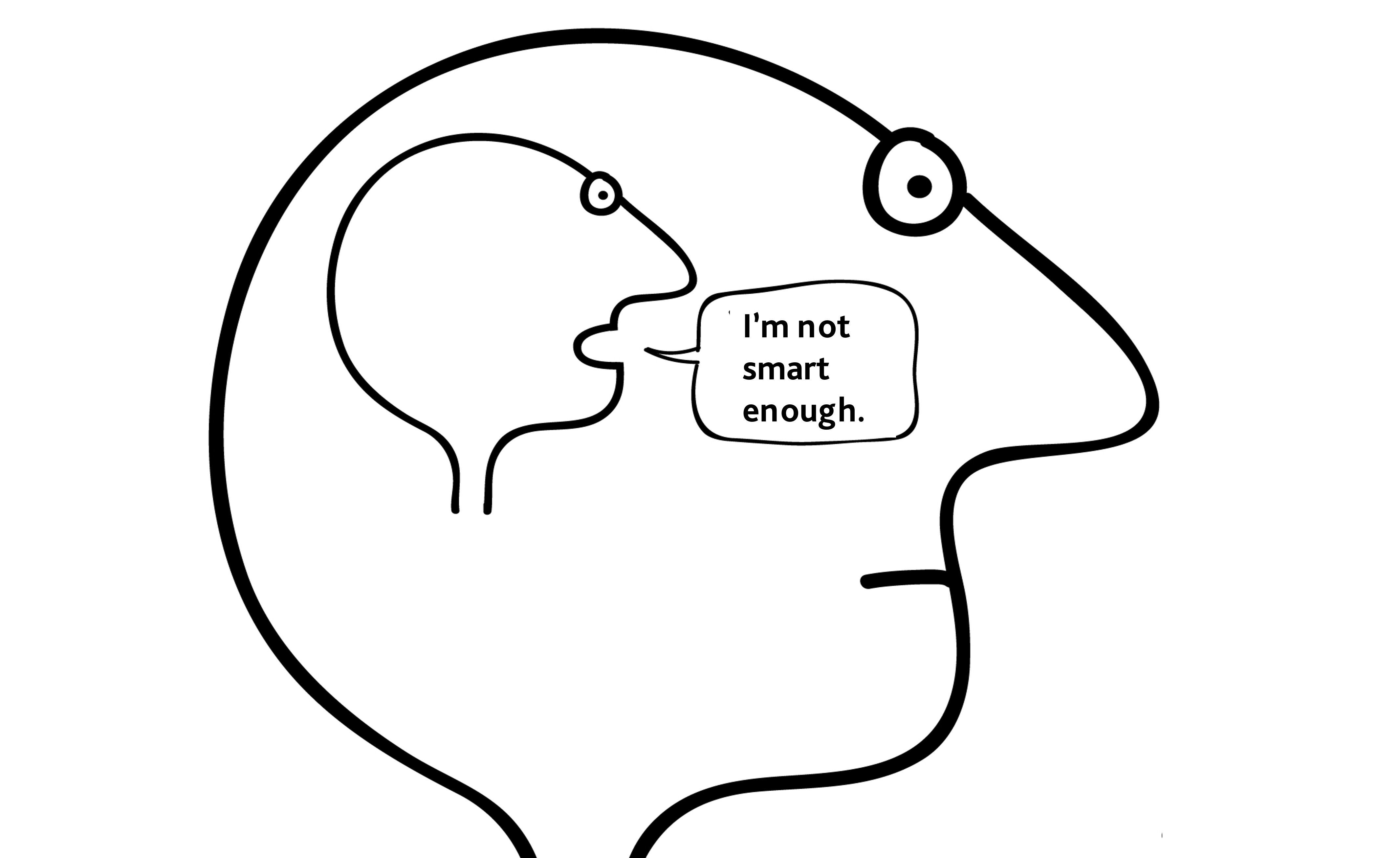
I’m not smart enough.
I don’t have the confidence.
I’m not creative.
I’m shit with money.
Nobody would employ me to do that.
People like me don’t succeed at things like this.
We rarely put “I believe…” in front of these statements. We say:
I am. And that’s a very different thing. Because once a belief becomes part of your identity, you stop questioning itm and you start defending it.
Why does seeing somebody else do it matter?
Because possibility is contagious.
Before Bannister, nobody had run a mile under four minutes. After Bannister, everybody knew a human being could. That matters.
Researchers studying human performance increasingly recognise that expectations, confidence, pacing, competition, technology, training and physiology all interact. Breaking a major sporting barrier doesn’t magically change everybody else’s body overnight. It changes the environment in which performance happens, including what athletes believe is attainable. Runner’s World
We’ve seen variations of it elsewhere. In 2025, Faith Kipyegon attempted becoming the first woman to run a mile in under four minutes. She didn’t make it.
She ran 4:06.42 under specially designed conditions. It wasn’t record-eligible, but it pushed the question from “Can a woman ever do this?” towards “How long before somebody does?” The Washington Post
That’s how barriers move. Impossible. Impossible. Impossible. Then somebody does it.
And suddenly the question changes. Who’s next?
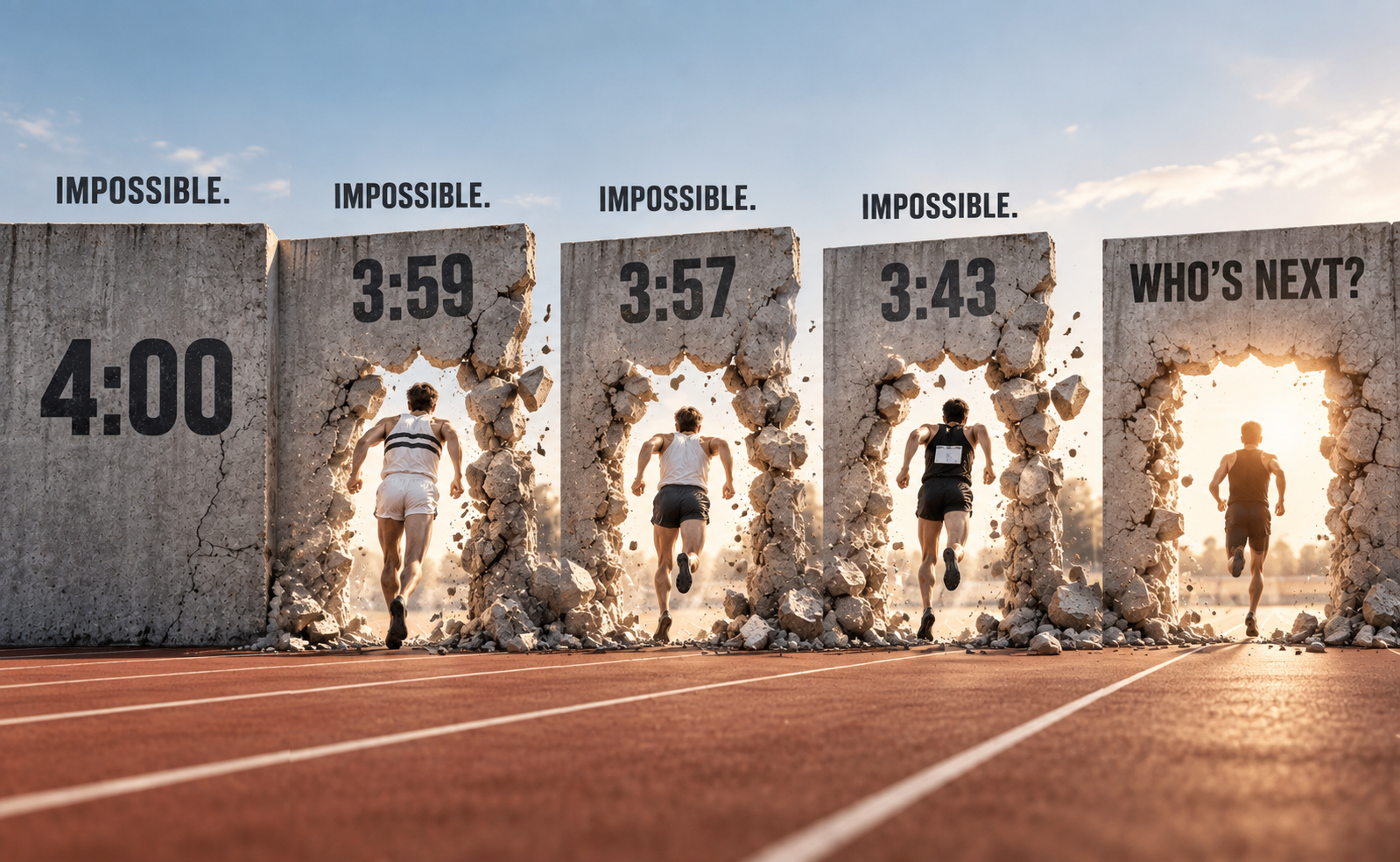
What are you treating as your four-minute mile?
This is where Roger Bannister stops being a story about running.
Because most of us have a four-minute mile somewhere. Something we’ve decided is beyond us. Something we’ve attempted before and failed. Something other people told us wasn’t realistic.
Something we’ve quietly decided belongs to younger people, smarter people, richer people, more confident people, luckier people.
Maybe you’ve carried the belief for so long you don’t even remember choosing it. That’s the danger.
A belief repeated for long enough starts masquerading as reality.
So perhaps the useful question isn’t:
What are my limits?
Perhaps it’s:
Which of my limits have I actually tested?
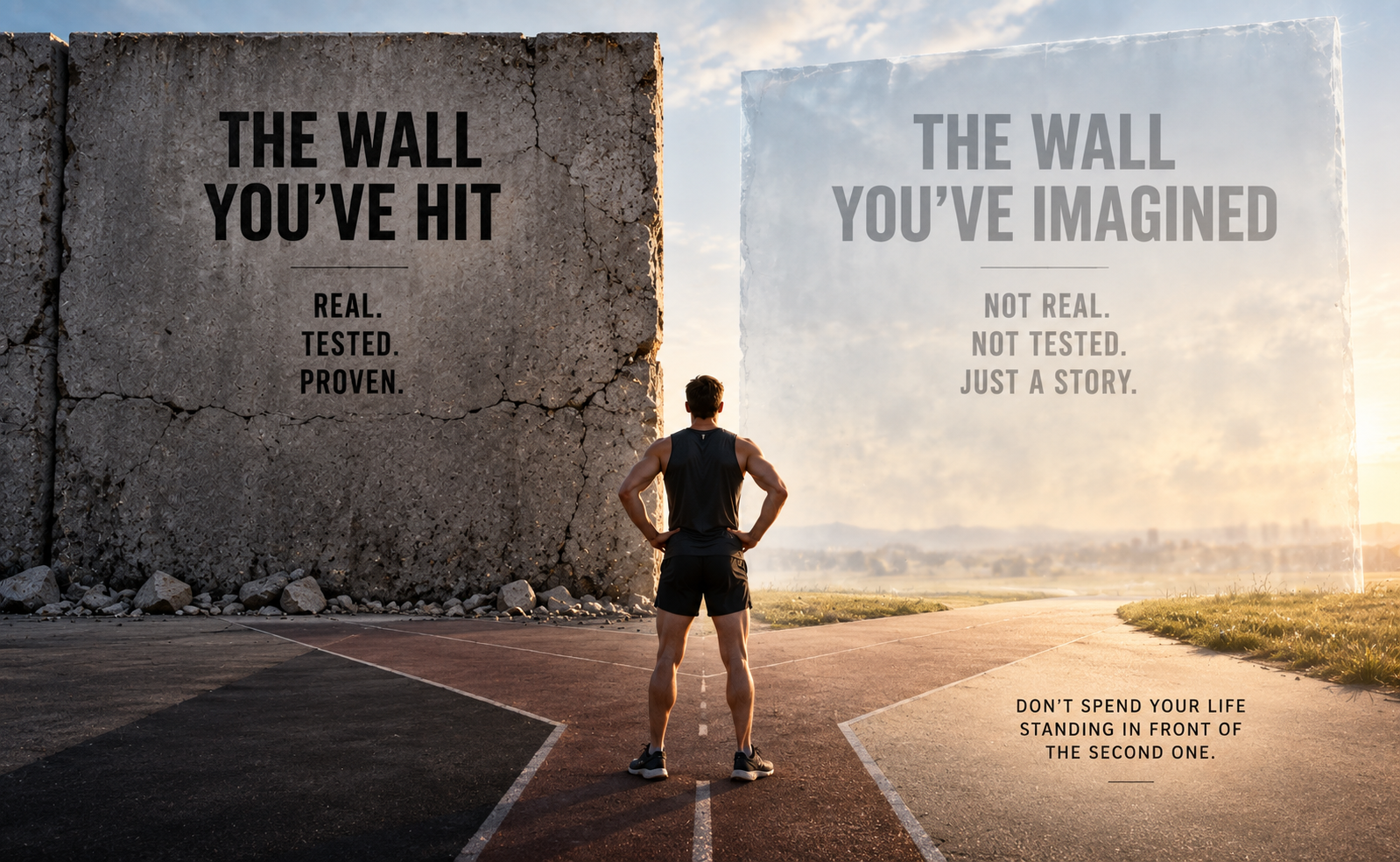
Because there’s a world of difference between a wall you’ve hit and a wall you’ve imagined.
And you don’t want to spend your life standing in front of the second one.