WHEN A BRAND ICON BECOMES A BRAND LIABILITY
For seven straight years, J&J ranked #1 in America for corporate reputation. Then the product that embodied the brand became the problem.
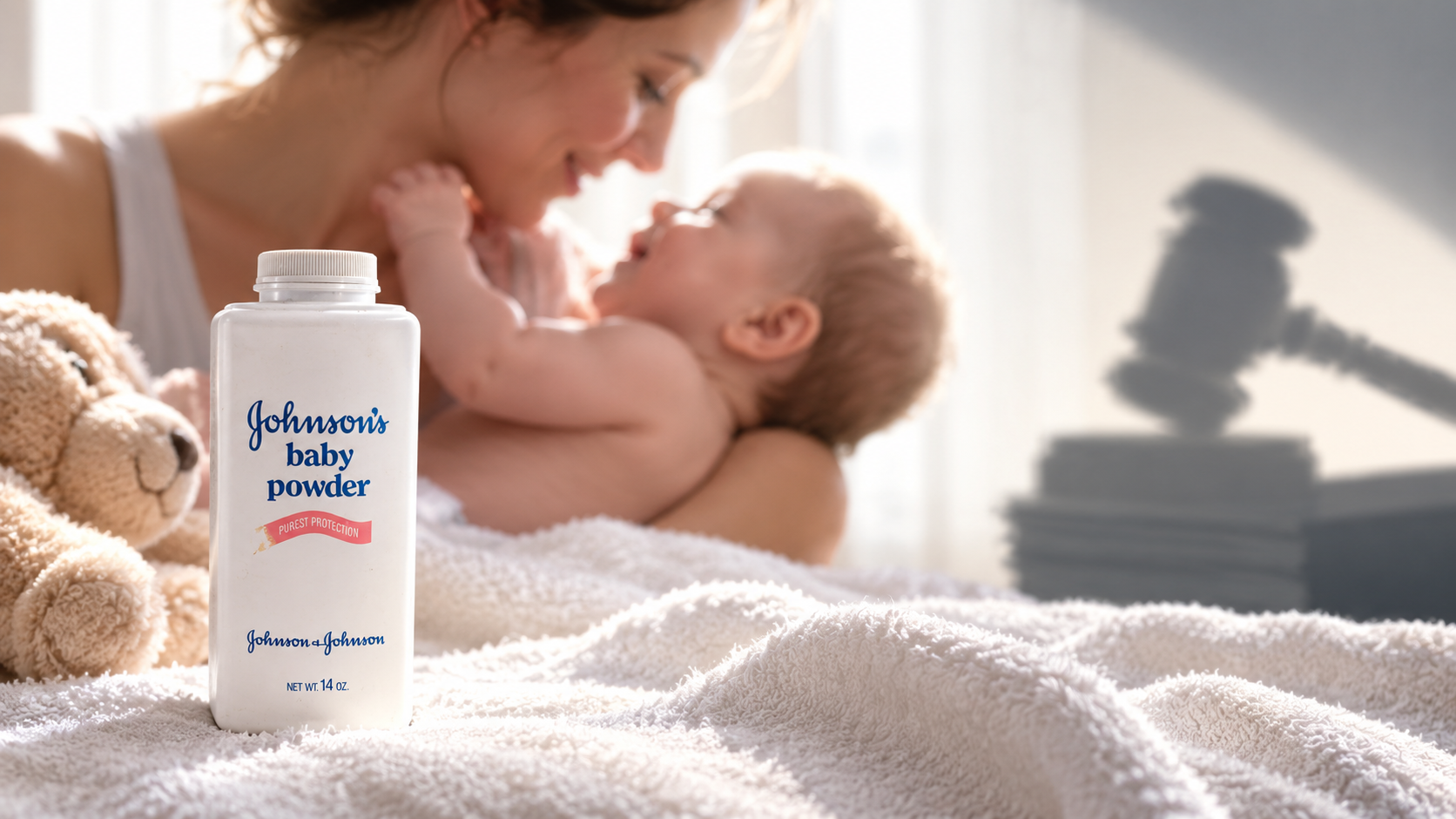
J&J’s brand in a bottle
I used to work on Johnson & Johnson. And if there was one product that captured everything the brand stood for, it was Johnson’s Baby Powder.
Baby Powder wasn’t just another J&J SKU. Johnson’s Baby Powder was almost Johnson & Johnson in product form.
Baby. Mother. Touch. Softness. Purity. Trust. Care.
It had been around since 1894. Generations of parents used it on their children. Even the smell became part of the brand. You could smell baby powder and know what it was without seeing the packaging.
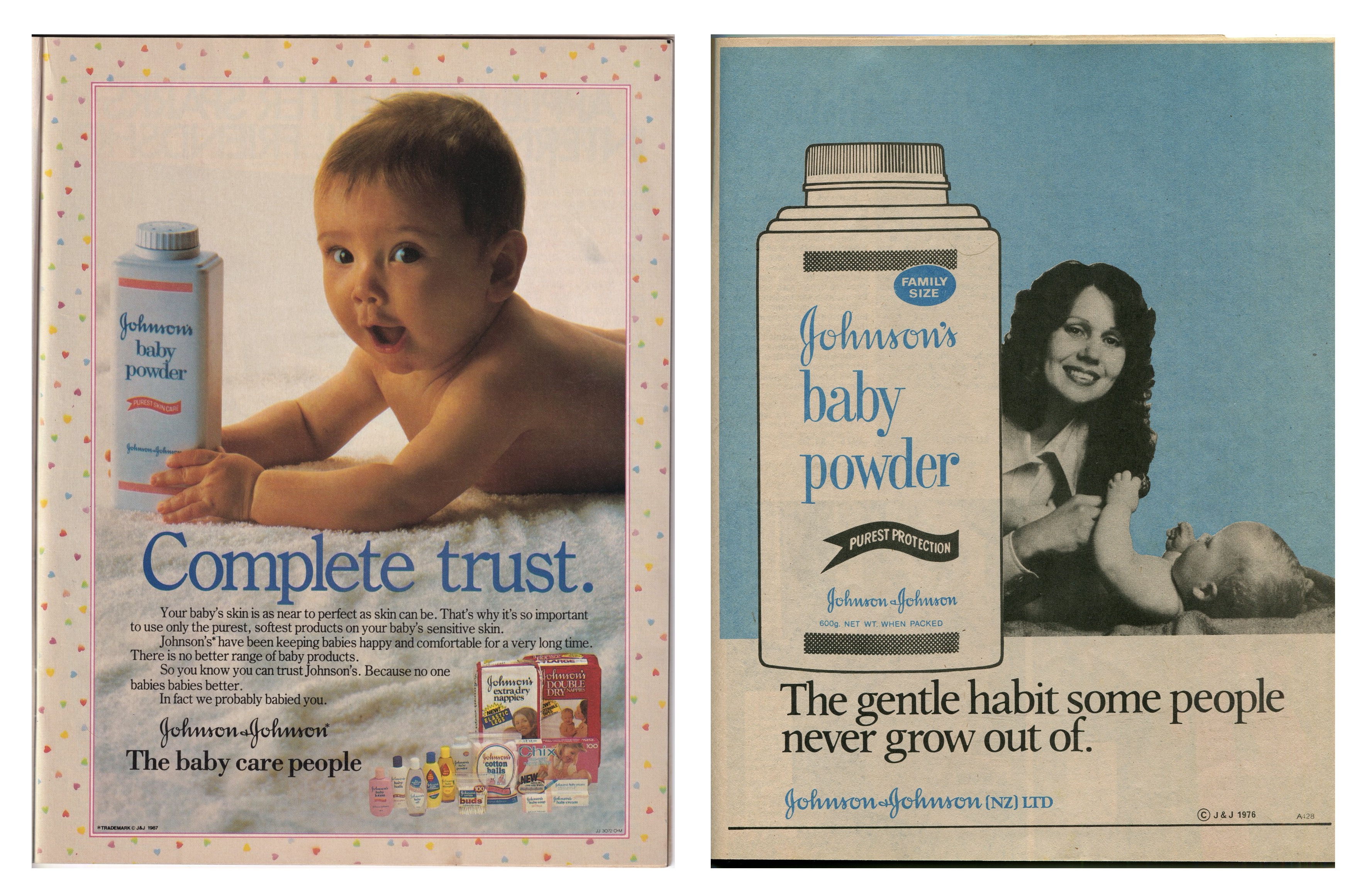
Then the product became the problem.
Traditional Johnson’s Baby Powder was made with cosmetic talc. Talc is a naturally occurring mineral, and talc deposits can form geologically close to asbestos, a known carcinogen. The concern has been whether the talc used in baby powder was contaminated with asbestos.
There are essentially two related allegations:
Talc products were contaminated with asbestos and caused cancers including mesothelioma. Long-term use of talcum powder, particularly genital use, was associated with ovarian cancer. J&J maintains that its cosmetic talc was safe, asbestos-free, and did not cause cancer. In 2023, the company discontinued talc-based Baby Powder globally and moved to a cornstarch formulation.
Then, in July 2026, Johnson & Johnson agreed to commit US$5.5 billion to resolve approximately 76,000 ovarian cancer claims. J&J still describes the claims as meritless and says the settlement is intended to bring the litigation to an end
Here, in Australia, a class action is also progressing, with its first case-management conference scheduled for 26 August 2026.
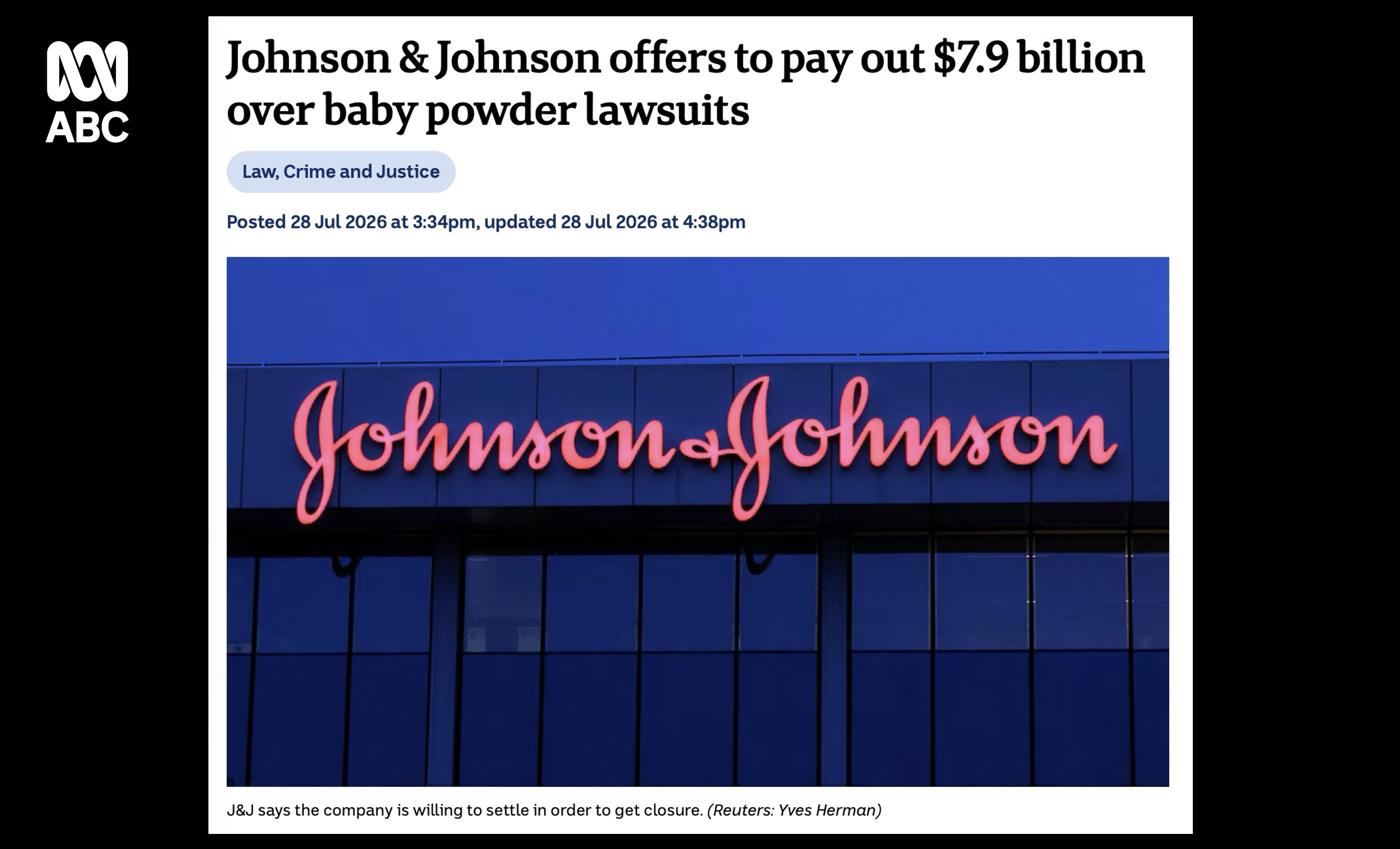
Who would have thought?!
For more than a century, Johnson’s Baby Powder accumulated meaning. Every mother who used it, every baby who smelled of it, every memory associated with that familiar white bottle added another tiny deposit of trust to the Johnson & Johnson brand.
And then, the product that arguably represented trust and care more powerfully than anything else in the J&J portfoliobecame the centre of one of the largest product-liability battles imaginable.
And when the product most closely associated with your values becomes the product at the centre of the controversy, you have a very unusual kind of brand problem. And here’s where it gets really interesting.
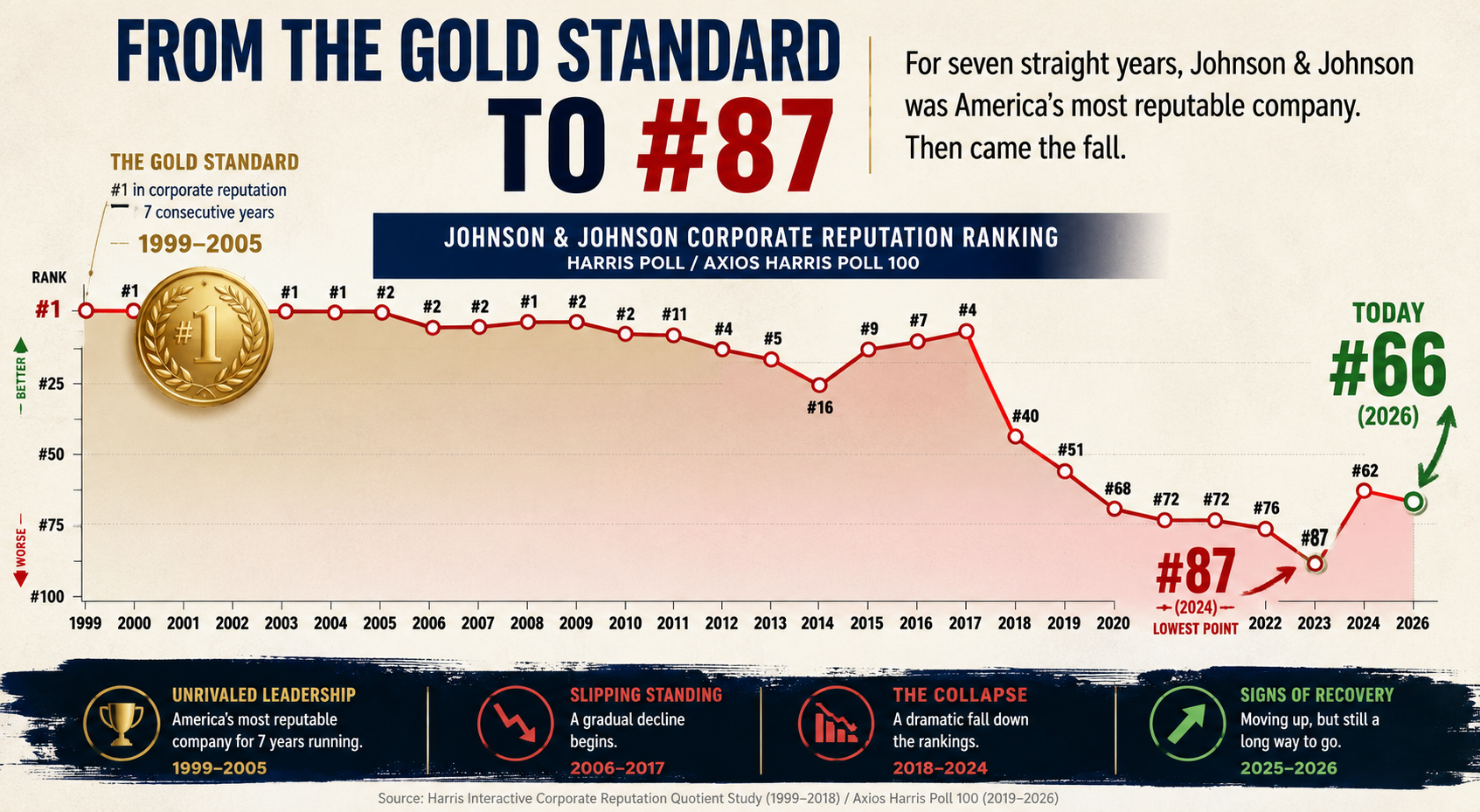
FROM #1 TO #87
When the Harris Poll began measuring corporate reputation in America in 1999, Johnson & Johnson ranked #1. It stayed there for seven consecutive years, from 1999 to 2005.
By 2024, J&J had fallen to #87. Today, it sits at #66.
Now, you can’t attribute that decline to Baby Powder alone. J&J is a huge company with a long and complicated history. But the numbers are extraordinary.
A company that once represented the gold standard of corporate reputation no longer occupies anything like the position it once did.
That’s the double-edged sword of an iconic product. When a product becomes one of the most powerful expressions of your brand, its reputation becomes part of your reputation.
The meaning flows both ways